Reflections: Black and Global Majority Arts and Activist Periodicals study day
To conclude our series of three blog posts exploring Black Cultural Archives Periodicals collections, Nick Brown reflects on the recent study day on Black and Global Majority-led arts and activist magazines. It was a busy, buzzing and engaging session, designed to be non-hierarchical and with everyone in the room able to share their knowledge, experience and perspectives. To kick us off, Dr Wanda Wyporska (Chief Executive of BCA) and Harlynn Homan (Archives Manager) welcomed us into the space and gave us a grounding in the organisation, the collections, its roots in activist histories and its ethos as a living archive constantly activated by participation from its plural communities of interest.
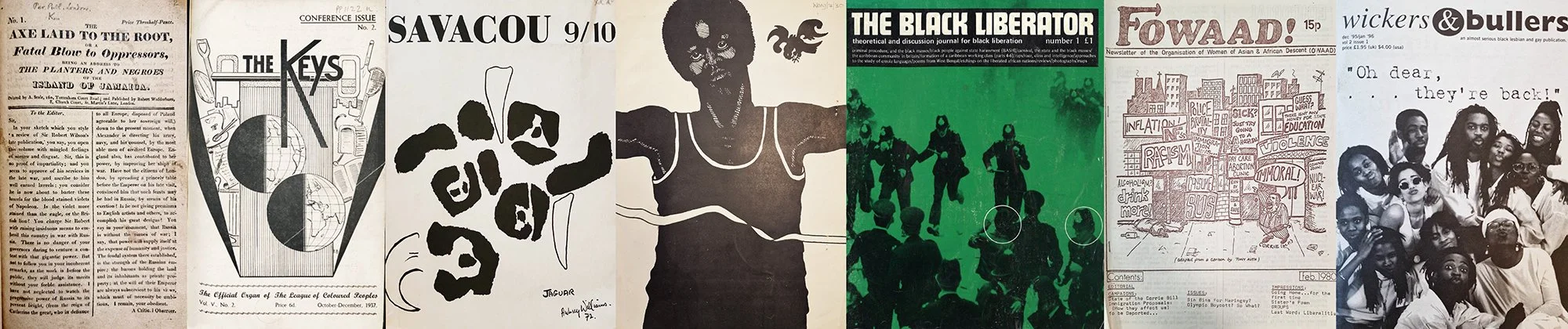
Next, I facilitated a ‘hands on’ show and tell engagement with a selection of periodicals, highlighting the breadth and depth, and the magazines, journals and newspapers which give a window onto the multifaceted history of Black life, struggle and creativity in Britain. Beginning by acknowledging long histories (including some not held at BCA), going at least back to at least 1817 with the publication of Axe Laid to the Root (or a Fatal Blow to Oppressors), Robert Weddebern’s radical abolitionist periodical. Staying with pre-war (and per-Windrush) material, we looked at The Keys: Official Organ of the League of Coloured Peoples (1933-1939) founded by Dr Harold Moody and edited by pioneering playwright, poet and broadcaster Una Marson. As well as being a campaigning journal working against systemic racism, The Keys also published what is probably the first profile of a Black British artist by a Black British writer, a brief illustrated article on the Jamaican-born sculptor Ronald Moody (brother of Harold). We then perused periodicals produced by the Caribbean Artists Movement (1966-1972), Black Power publications such as the Black Eagle (1968-9) and Black Liberator (1971-1978), Black feminist newsletters such as Speak Out! (1977-1983) and FOWAAD (1979-1982), as well as drawing out lesser-known Black queer histories through magazines such as Wickers & Bullers (1992-5).
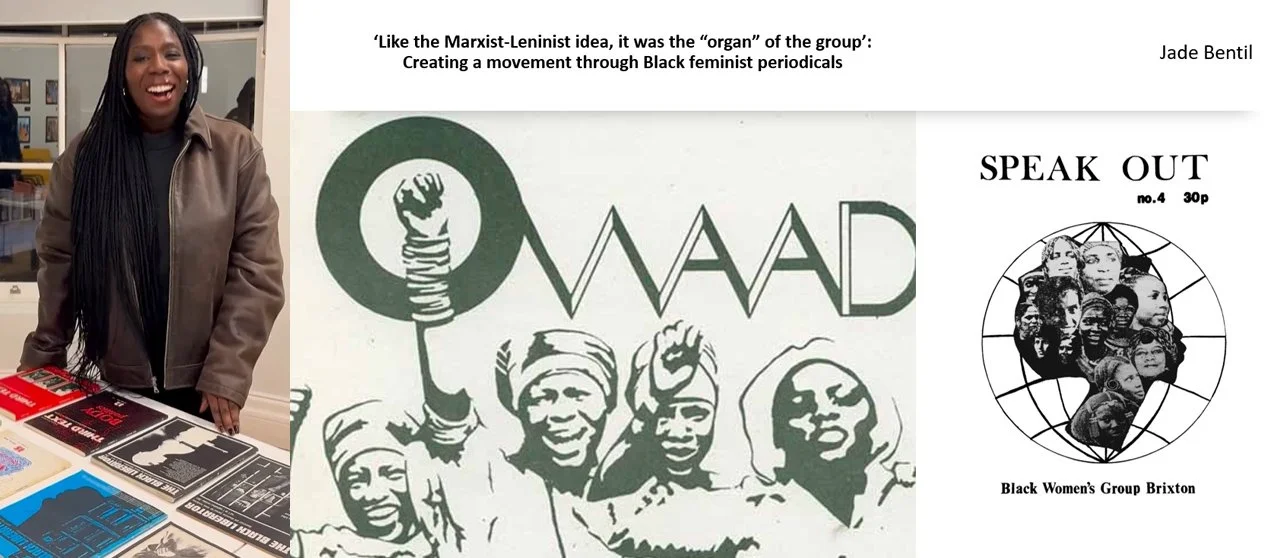
Dr Jade Bentil
Starting the first panel, Dr Jade Bentil illuminated how the explosion in Black feminist periodicals like Speak Out! and FOWAAD! in the 1970s and 80s played a significant role in forming a movement, and acted as sites of political education, knowledge sharing and experimentation. They placed Black women in conversation with each other and documented the history of a movement in evolution.
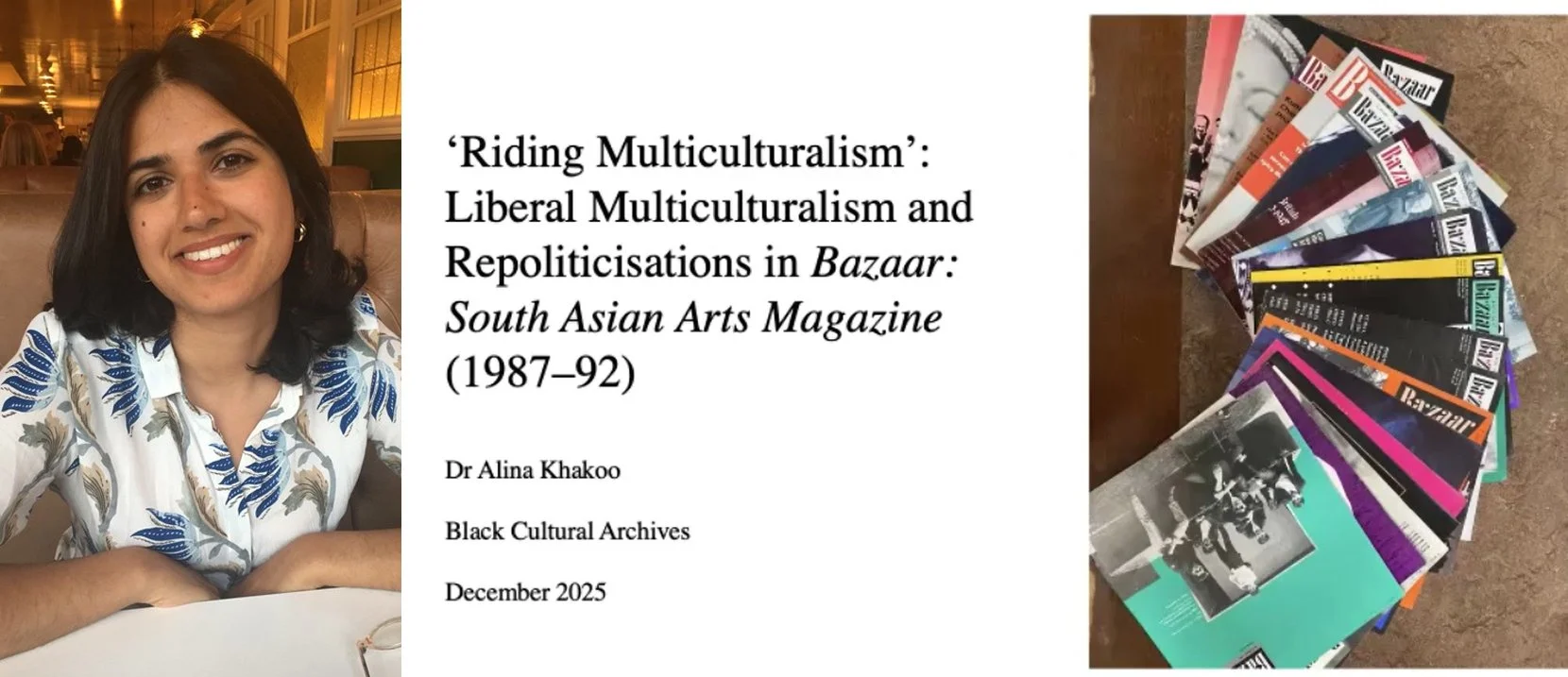
Dr Alina Khakoo
We then shifted attention to Bazaar: South Asian Arts Magazine (1987-1992) with a presentation by Dr Alina Khakoo, who unpacked how the magazine used visual arts practice to intervene in the politics of representation. Charting its development and overlap with the 1980s generation of artists known as the ‘Black Arts Movement’, Alina drew out how the magazine also fostered specifically South Asian feminisms, provided a forum for queer art and activism and gave space to polyvocal coalitional politics. As Alina was unable to join us in person, she kindly pre-recorded her presentation.
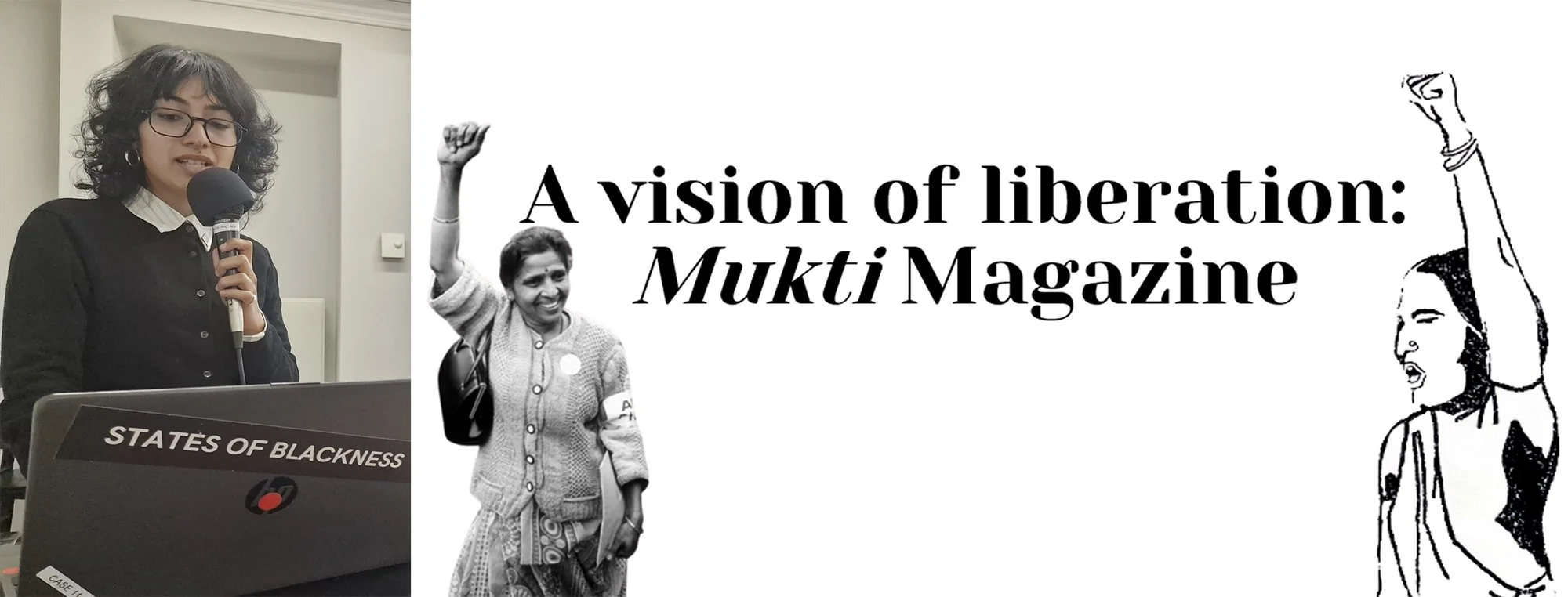
Vartika Rastogi
Closing the first session was Vartika Rastogi who shared their in-depth research on Mukti (1983-1987) a South Asian feminist magazine. This extraordinary publication was simultaneously produced in six languages to reach as many South Asian women as possible. It was rooted in sisterhood and solidarity through communal decision making and provided a safe and supportive space for discussing taboo subjects and expressing dissent, rather than glossing over differences. Vartika elaborated how it functioned both to foster local activism and as a node in transnational feminist networks. Importantly, they closed their presentation by asking what lessons and tactics we can learn from Mukti today?
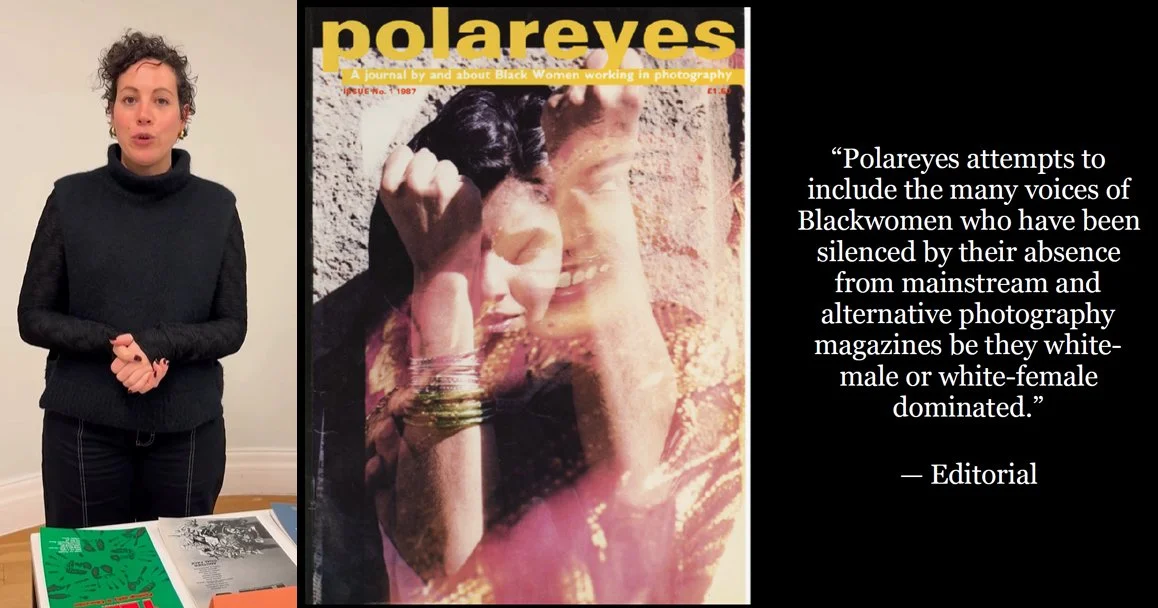
Dr Taous Dahmani
Starting our second session, Dr Taous Dahmani introduced us to Polareyes (1987), the UK’s first magazine ‘by and about Black women working in photography’. This was both a critical examination of how artists, including Ingrid Pollard, Maxine Walker, Joy Gregory, Mumtaz Karimjee and Molly Shinhat, used photography as a creative tool of resistance, it was also a personal reflection of Taous’s own journey, having spent over a decade researching Black British photography.
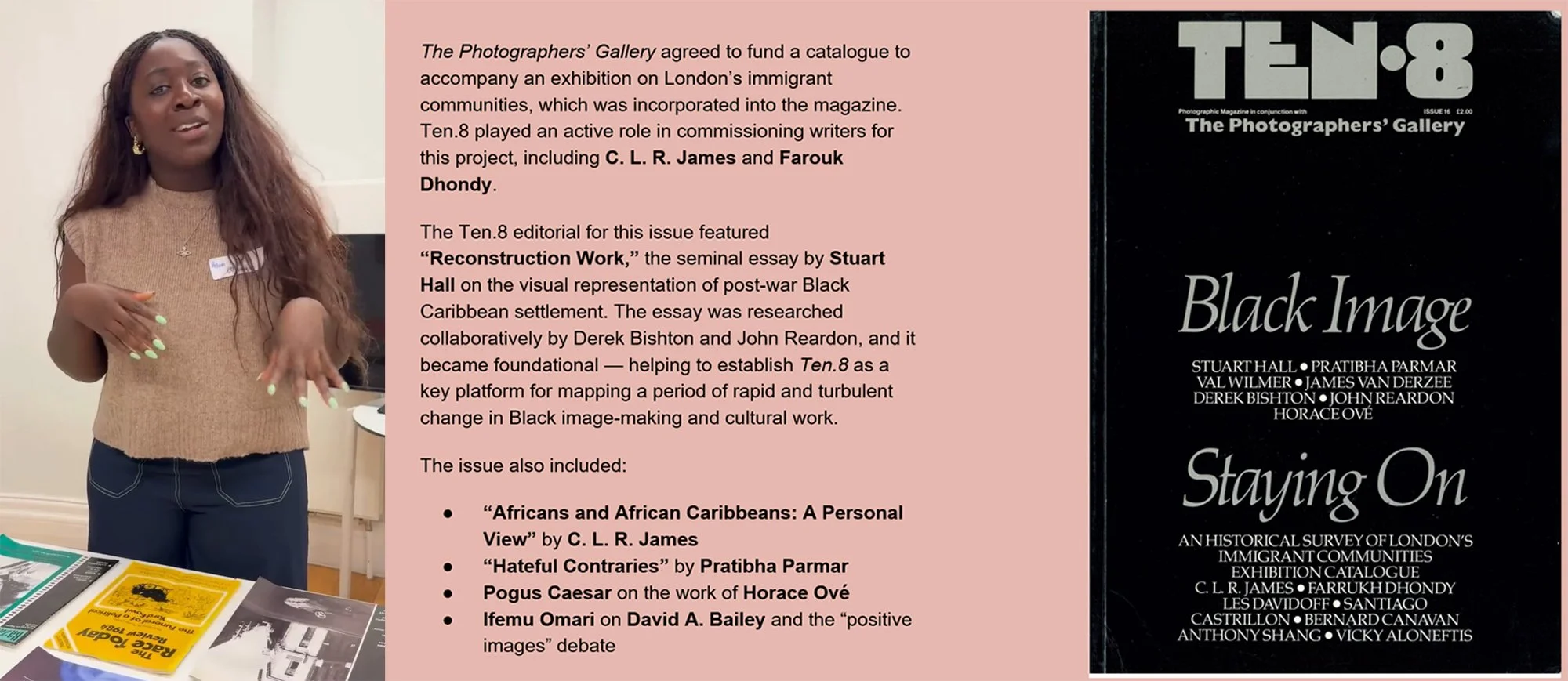
Pelumi Odubanjo
Sticking with photography, Pelumi Odubanjo’s presentation explored the crucial role that the journal Ten.8 played as a key platform for Black image-making and cultural work during the turbulent era of the 1980s. Despite initially being founded by an entirely white collective of editors, the later involvement of the Jamaican-born cultural theorist Stuart Hall alongside practitioners and writers including David A. Bailey, Sunil Gupta, Isaac Julien and Kobena Mercer opened new dialogues about the politics of race and representation.
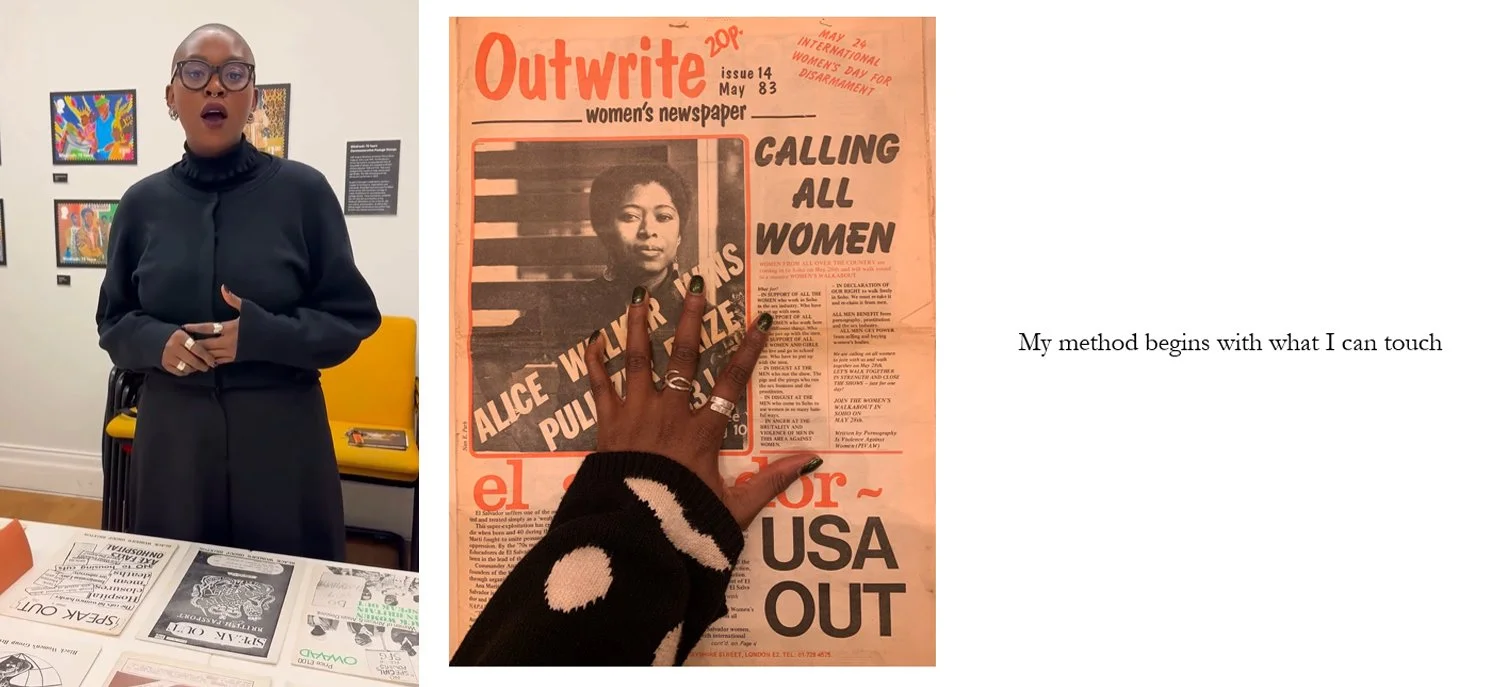
Dr Lola Olufemi
Closing the formal presentations, Dr Lola Olufemi gave a breathless tour de force introduction to her digital assemblage ‘This is a Temporal Landscape, You Will Find No Direction Here’, comprising hundreds of archival documents (including many extracts from the periodicals shared during the day) and places them into multi-directional dialogue with original interviews with radical social movement organisers. Intended as a pedagogic tool for grassroots community groups, the ‘Temporal Landscape’ invites new ways of engaging with the archive that push back against hierarchical, colonial logics of administration.
Prof Paul Goodwin chaired the closing Q&A and to end the day, and Hannah John led a tour of the exhibition ‘Race Today: Black History is British History’, delving deeper into the story of the radical anti-racist journal, published from a squat just a couple of streets away from BCA. The day was animated by lively, critical conversations, bringing together voices from different generations, including younger artists and activists and elders who had been the driving force behind bringing these important publications into being in the first place.
An edited recording of the event will be made available on the BCA’s YouTube channel soon. The study day was curated by Nick Brown (PhD candidate at UAL) with support from Harlynn Homan, BCA Archives Manager. It was organised in partnership with the Research Centre for Transnational Art, Identity and Nation (TrAIN) at University of the Arts London.
To explore the Periodicals collection further, a great place to start is the Periodicals Subject guide or search the catalogue for individual titles https://collections.blackculturalarchives.org/repositories/2/resources/38
If you’re interested in finding out more about the speakers’ research on these magazines and newspapers, we’ve included external links below.
Nick Brown’s article Publishing as insurgency: Black and South Asian women artists transforming feminist magazines (Journal of Gender Studies, 2025), which includes brief case studies of Mukti and Polareyes, is available open access here.
Dr Jade Bentil wrote the foreword to Milo Miller’s book Speak Out! The Brixton Black Women's Group, available here. She also contributes a chapter on the Black Women’s Movement to the book Resist, Organize, Build: Feminist and Queer Activism in Britain and the United States During the Long 1980s (2023), available here. Her debut trade book, REBEL CITIZEN, uses oral history interviews to explore the lived experiences of Black women who migrated to Britain following the Second World War and is forthcoming from Allen Lane. Her debut monograph, an oral history of the Black Women’s Movement, is forthcoming from Oxford University Press.
Dr Alina Khakoo’s book A Brief History of British South Asian Art (2025) is available from Tate here. Her research chapter on Bazaar: South Asian Arts Magazine is available in the book Counter Print: The Alternative Art Press in Britain After 1970 (2025), available here.
Vartika Rastogi’s article Towards liberation: uncovering the principles of feminist mediation in Mukti magazine (Journal of Gender Studies, 2025) is available here.
Dr Taous Dahmani’s research chapter on Polareyes is available in the book Resist, Organize, Build: Feminist and Queer Activism in Britain and the United States During the Long 1980s (2023), available here. Polareyes is also featured prominently in her co-edited book Shining Lights: Black Women Photographers in 1980s–90s Britain (2024), available here.
Pelumi Odubanjo’s research on Ten.8 culminated in curating a major exhibition on the legacy of the magazine at The New Art Gallery Walsall, opening in Spring 2026. Further details are available here.
Dr Lola Olufemi’s digital archival project THIS IS A TEMPORAL LANDSCAPE YOU WILL FIND NO DIRECTION HERE is available here. Her books Experiments in Imagining Otherwise (2021), is available here, and Feminism Interrupted: Disrupting Power (2020), is available here.