TURNING POINT
The power of stories. At the very heart of Sweet Patootee Arts’ ethos and their ever-inspiring projects, this is what I came to fully embrace after a morning spent at the TURNING POINT project’s screening and oral history workshop delivered by Black Cultural Archives & Peckham Platform. For after all, it is precisely through stories and oral histories that cultural memories, rife with notions of tradition, history, identity, trauma and tragedy, may be preserved, passed down and given their own deserved dignity and recognition.
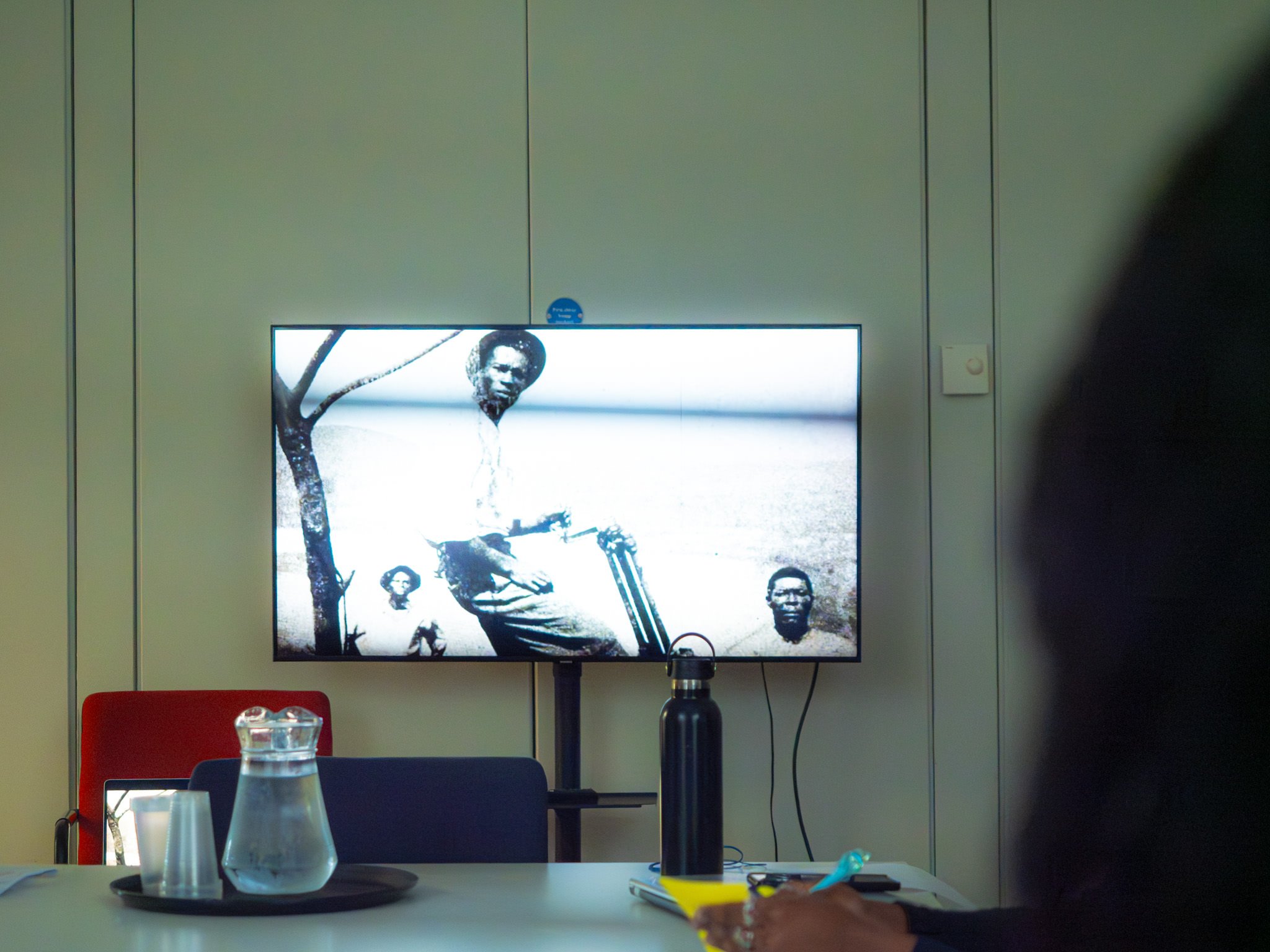
TURNING POINT screening and workshop – photo by Trevor Price
The TURNING POINT film is one so wonderfully put together, combining superb acting, lighting and sound design, and archival images and oral histories, resulting in a particularly moving and emotive experience that transported me to 1920s Barbados and Jamaica. In line with Sweet Patootee’s desire to spotlight personal stories from diverse backgrounds, the screening ignited in me a will to recognise further and seek out the importance of everyday stories that reflect the diversity of our society and inform us of a history that is not past but still living.
These stories are grounded in real people in an excerpt of four character narrations, each multifaceted and impactful, displaying various elements of the Black Jamaican and Barbadian experience post WWI, one that has been so neglected until now. The mixed media forms of storytelling with a focus on folk cultures, exemplified in the soundscape of rare Caribbean work songs together with animal analogies, only made them further engaging. The presentation of such personal stories on such an intimate level, portrayed in monologue-style performances and accompanied by close up shots, truly touched my soul, providing a most full-bodied experience that evoked every character’s innermost thoughts and feelings, almost like a one-to-one conversation, a travel in time, an uncovering of the hidden. After all, as Tony, the film director, explained, who better to look in on than ordinary people “who do extraordinary things” and provide the best perspective through which we may better understand and observe historical memory.
Beyond this, these ground up stories were further moving to me when considering the hesitation, insecurity and almost fear, that often hinders or prevents people from telling their stories, questioning whether their memories are worthy to share. Considering this, it struck me deeply the way in which the film helped to lay bare such assumptions both in the use of various testimonies for its material and its objective to work as a catalyst for public engagement activities, in this case for the oral history workshop. In my interpretation, the use of excerpts also echoes the overarching theme of fragments and traces that permeates both oral histories and Black history. We get a little glimpse but not always the whole picture. In the same way, elders’ stories may often be passed down but not fully transmitted. Nevertheless, these tiny snapshots prove intensely powerful. I thoroughly enjoyed the breadth of emotions and experiences in the film, spanning from PTSD, defiance and reclaiming of agency amidst a backdrop of sexual violence, humour and gender subversions and finally the harrowing display of colourism and class division. One element that struck me most was Beulah’s story and the use of humour in her confident performance. The role of stories within the community during this period becomes evident, particularly through the relationship between her and her “audience”, yet we also see deeper layers through the constant teasing and shunning she is met with, similarly reflected in Cephus’ vignette.
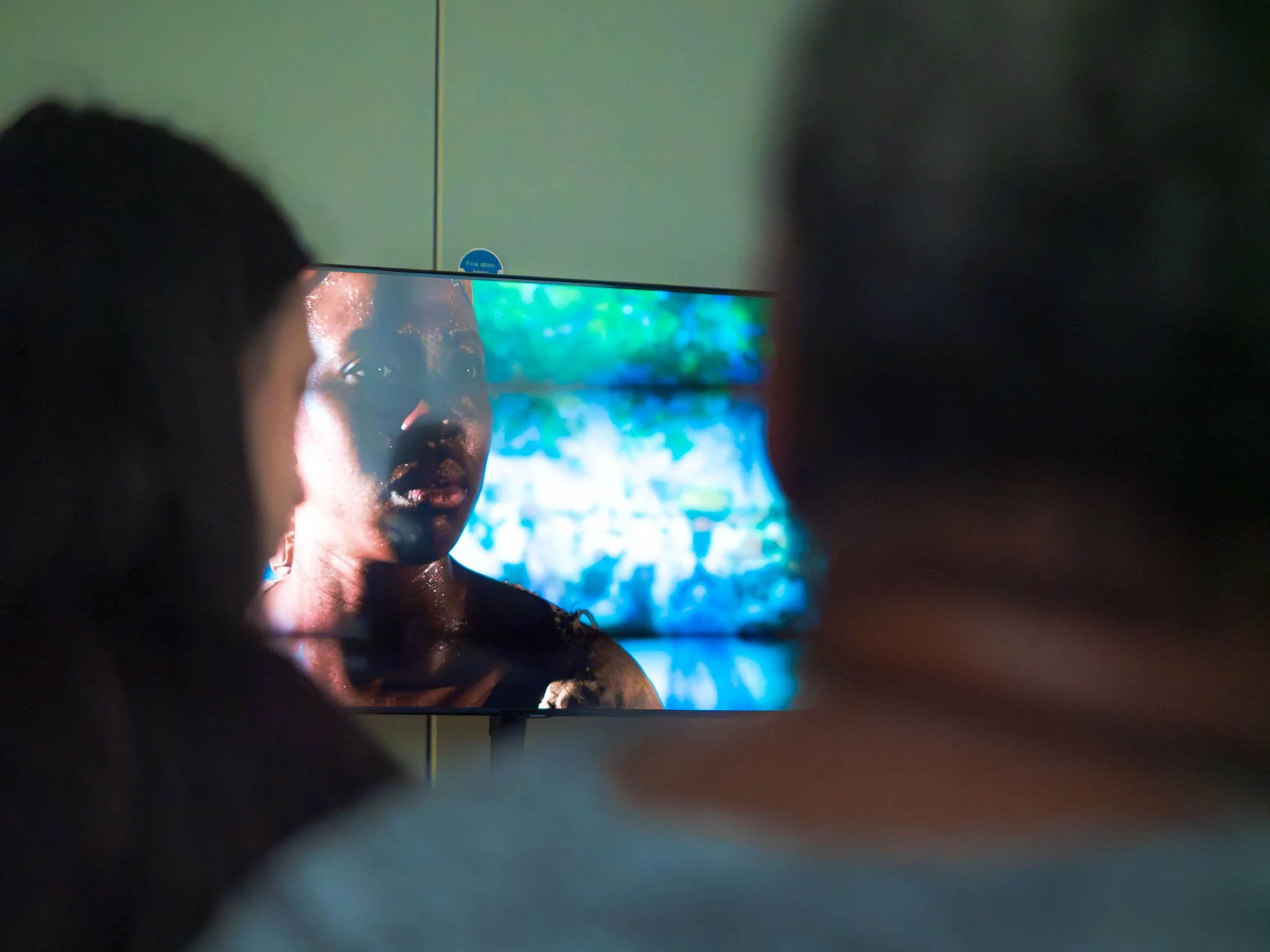
TURNING POINT screening and workshop – photo by Trevor Price
This use of comedy brought me to questions of what perhaps lies underneath, reminding me of the habitual use of comedy to suppress deeper scars, for example, in the caricature-like imagined interaction between Phibby and the Kaiser as she rather hilariously manages to end the war. This signals perhaps a relief to imagine subverted power dynamics and an escape to a hypothetical where there exists such a simple way to end this cruel reign of savagery. Indeed Beulah at points seems to flit between bravado and performance and moments of hesitation, insecurity (or what else could it be?). This hints again at underlying layers of complex emotions, which I always find particularly intriguing. Similarly, the sudden shift in emotion and expression on the previously debonair Cephus’ face at the labelling of “Black trash” reminded me of the many cycles of hurt and discrimination found even within the community; these words cut deep and have greater weight to them. Consequently I reflect on the notion of collective experience yet at the same time, that these are and never will be monolithic experiences. The community as in this case is often fragmented, broken and disjointed with their own cycles of hurt, betrayal, shame etc. Yet this invites us, myself included, to interrogate then the underlying factors behind this i.e. trauma, PTSD, etc, perpetrated under hegemonic colonial and capitalist structures. Indeed, no action is ever committed in a vacuum; we are all the product of the environment around us and its many factors, and respond differently. These elements then reaffirmed to me the need for a variety of different perspectives and stories, allowing you a wealth of knowledge.
Almost daunting yet equally refreshing and liberating for me, we maintained an open conversation following the screening, giving space to one another to share any thoughts and feelings. This together with the upcoming intergenerational interviews that will be led by youth (as part of the Black Cultural Archives), shed a light on the power of words and shared conversation to highlight lived experiences, therefore allowing cultural memory to thrive. Although many commonalities cropped up, the different specific moments that struck each person, their individual insights and even the difference in articulation, reinforced this message to me. It was equally impactful to view the effect it had on both the youths, in shaping their perception of Black history and the elders, in the resonations the film transmitted with their own experiences.
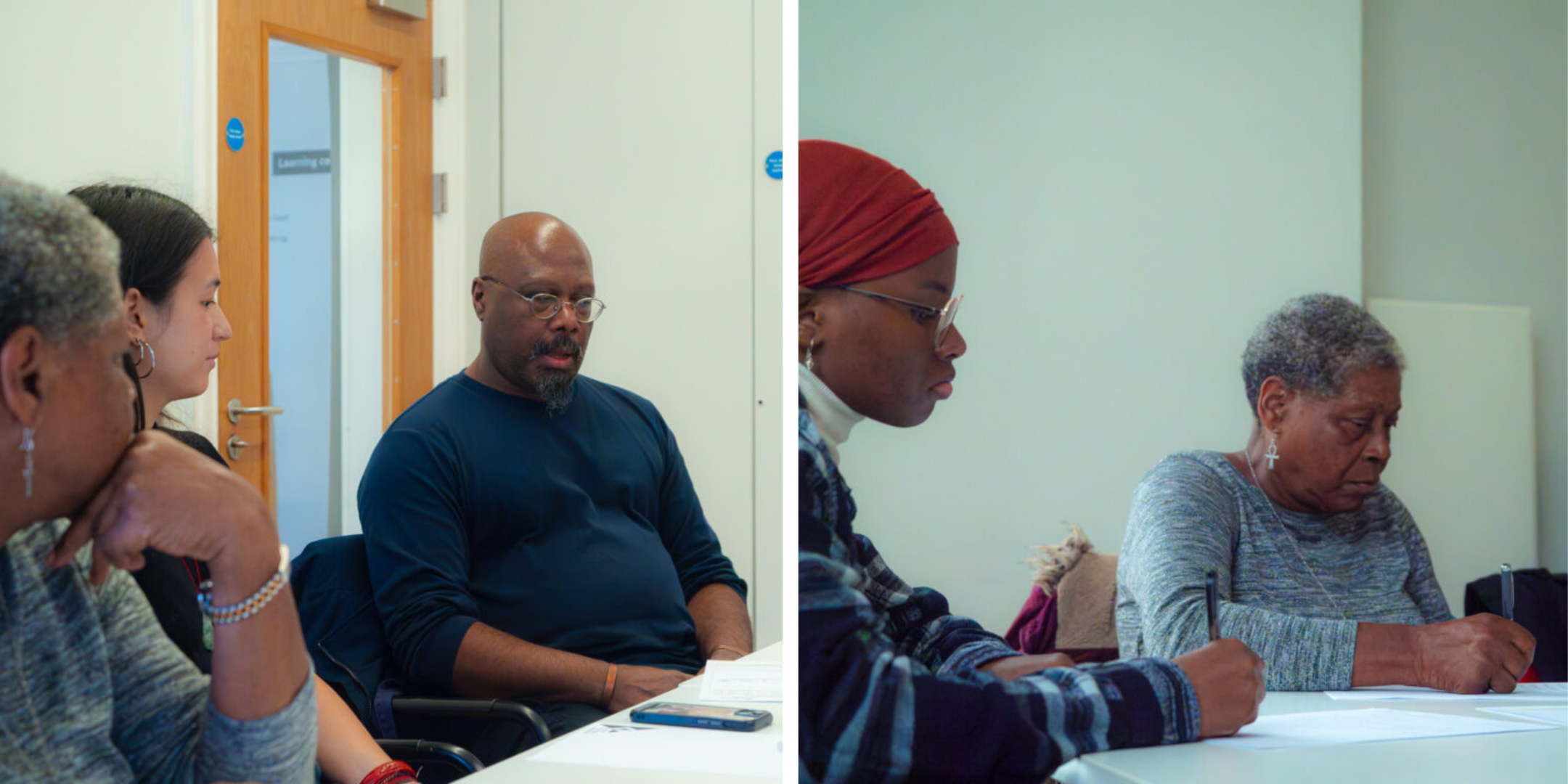
TURNING POINT screening and workshop – photos by Trevor Price
What I found even more interesting though were the different threads people would pull up relating to their background, for instance, one of the elders shared her identity as a Garveyite and her distress at recent learning of colonial depravities committed in the colonial rule of Congo and Namibia. Meanwhile, Harlynn, the senior archivist, brought up similarities found in India under colonial rule as well as her experiences moving to the UK. In my case, alongside universal themes of abuses, both physical and sexual, of the female body (as explored in colonial Mexico in my dissertation), what struck me most were the residual effects of trauma and shame on the older generation. Likewise to Tony’s recounting that many interviewees would question the validity of their stories, asking permission if they were even able to express them. I thought of my Cantonese grandmother. Having lived through authoritarian regimes, upheaval, migration and likely trauma amidst a culture of taboo, she shies away from sharing old memories; better to leave things in the past. An idea that is also rather controversially evoked in post-Civil War Spain with the Pacto del Olvido (the Pact of Forgetting), signalling the decision to avoid confrontation of the crimes committed under Franco.
For this reason, the shift towards oral histories and community conversation, as represented in the workshop, was inspiring and touching, particularly at the prospect of growing connection between generations. This also echoed the interpersonal narrative that is highlighted throughout the film with the incorporation of off-screen speakers, emphasising again that no story is individual. Indeed, this is what I feel art truly is – creating conversation and generating reflection, especially significant in the context of Black history and heritage. Just like oral testimonies were a key in the dissemination of Black British history and is in part what allowed us to be in that room, I would like to think these conversations worked for the same purpose – continuing to pass down these experiences and stories with our own reflections as a testament to the injustices and the harsh realities of 1920s’ post-slave societies in the Caribbean.
The Film and workshop then inspired me to think more critically and creatively about heritage, whilst recognising the need to reclaim ones right in experiencing life, sharing your stories and those of others, each person colouring stories in their individual way. To think of the interviewees who considered their stories unworthy, yet precisely these conversations have led in part to the creation of the TURNING POINT film and now the oral history workshop, which I’m sure will generate even further conversation. To wrap it up, it was a very enriching, thought-provoking yet also empowering experience to take part in such a seemingly informal but in reality, important conversation and I am very excited to see more of Sweet Patootee’s work and continue to be a part of it!
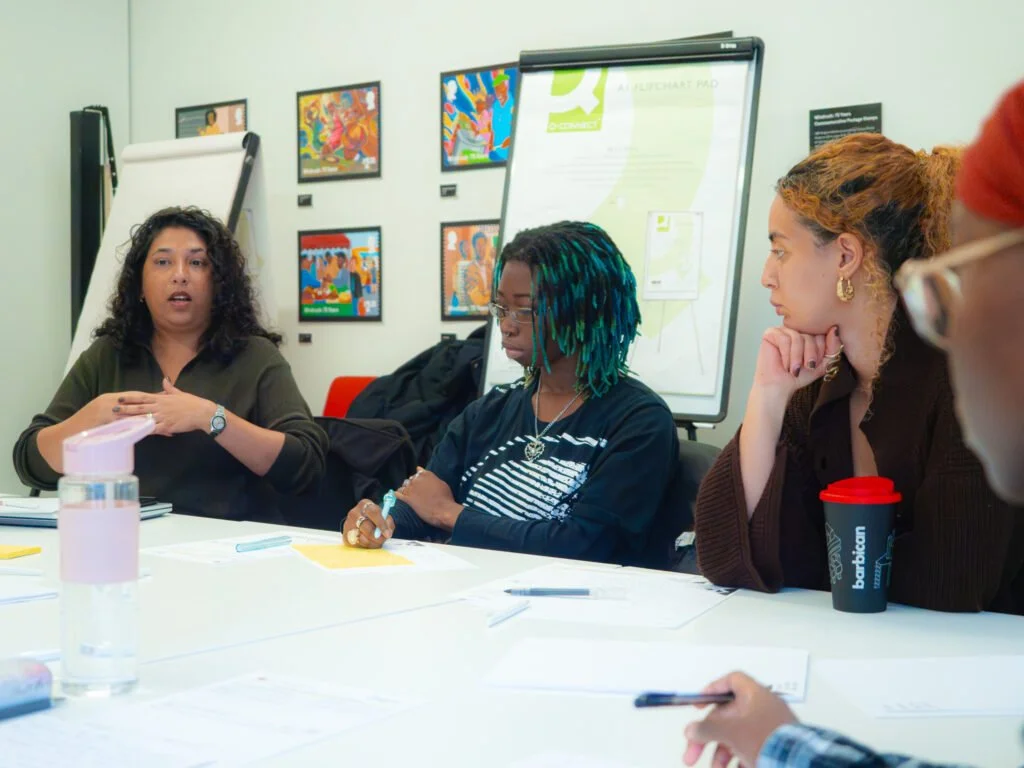
TURNING POINT screening and workshop – photo by Trevor Price
This intergenerational oral history workshop formed part of the final phase of TURNING POINT, a heritage and creative programme inspired by the film installation and Black heritage comedy‑melodrama of the same name. The TURNING POINT Oral History Project was delivered in partnership with Black Cultural Archives, Peckham Platform, and Sweet Patootee Arts.
A small group of elders shared memories sparked by the TURNING POINT exhibition. Their stories have been recorded, transcribed, and preserved for future generations at Black Cultural Archives, Peckham Platform, and Sweet Patootee Arts.
This blog was originally published on the Sweet Patootee Arts website. Thank you to Tony Thompson with Sweet Patootee Arts and to the author, Aurelia Fung Roviras.